Virtual Egyptian Temple
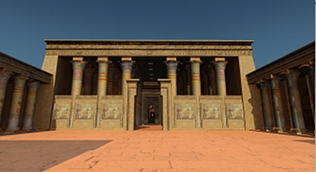
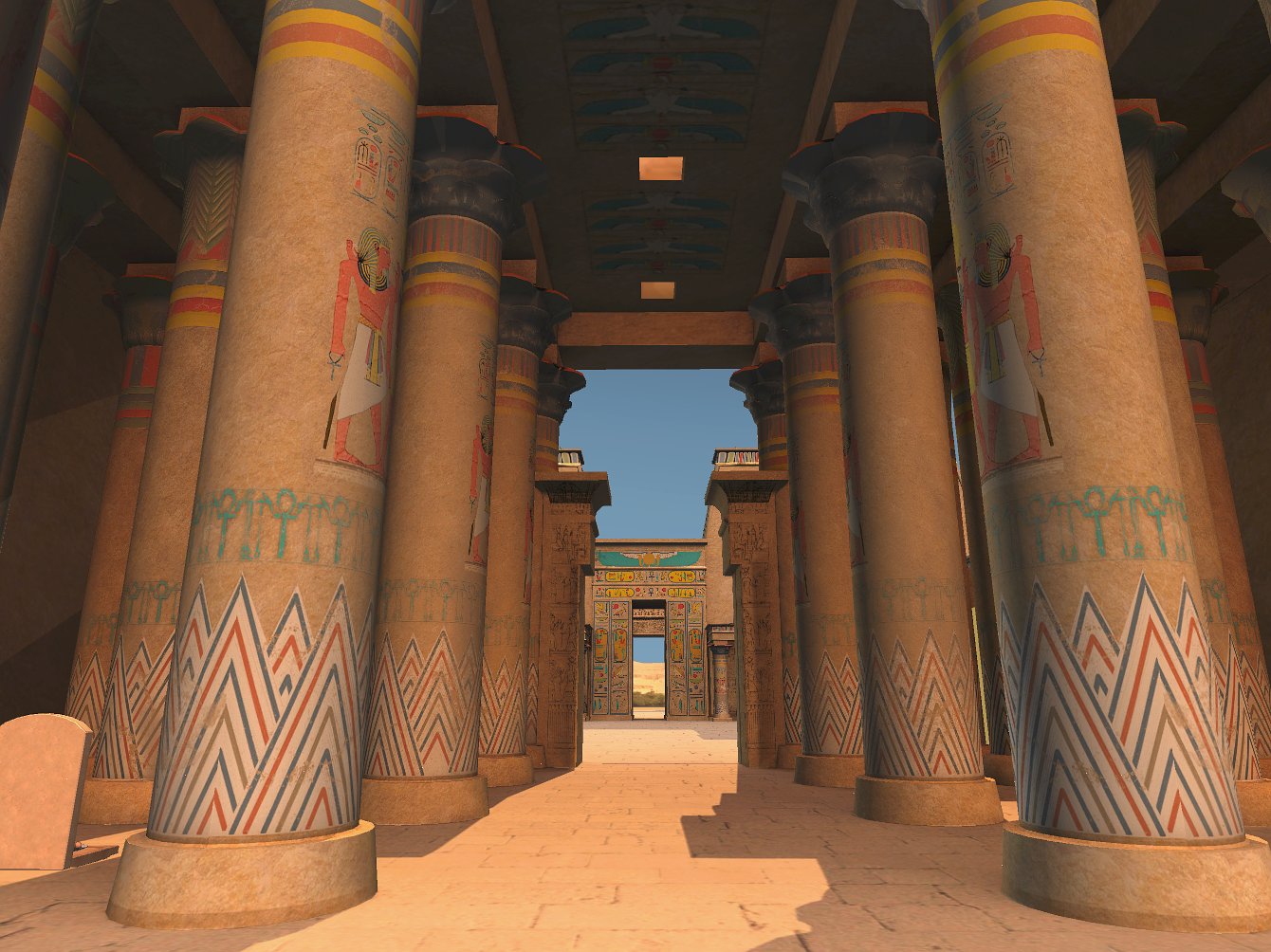
At the center of every flourishing ancient Egyptian community, there was a sacred temple, the House of the Divinity. This Establishment (Sacred Corporation) was a model for the Egyptian world, encompassing religion, government, daily life, and harmony between heaven and earth. The Virtual Egyptian Temple does not represent any particular site, but embodies the key elements of a New Kingdom temple. It is built from respected sources and intended to for all ages' curricula in history, archeology, religion, and culture. The temple itself and all supporting materials are free to the public for all uses, as described in the end-user license agreement in the installation package.
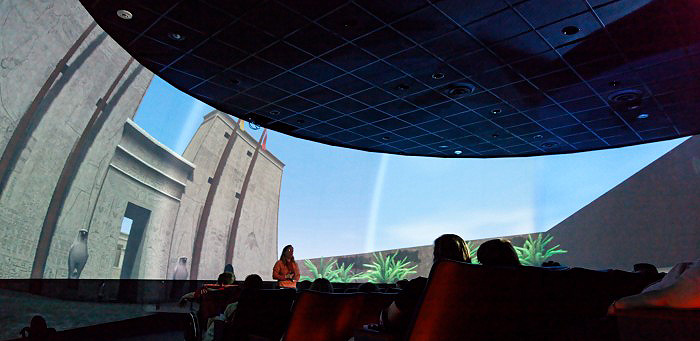
Tours of the Virtual Egyptian Temple is a regular show at the the Carnegie Museum of Natural History in Pittsburgh. Click on the image, above, for close-ups of the temple.
Read the book, which provides background information on the temple. It is a bridge for the reader from the temple itself to more general information about ancient Egyptian life and culture.
Publications
Troche, J., Jacobson, J. (2010) An Exemplar of Ptolemaic Egyptian Temples. Computer Applications in Archaeology (CAA), Granada, Spain, April, 2010 PDF
Handron, K., Jacobson, J. (2010). Extending Physical Collections Into the Virtual Space of a Digital Dome, The 11th International Symposium on Virtual Reality, Archaeology and Cultural Heritage VAST (2010), A. Artusi, M. Joly-Parvex,G. Lucet, A. Ribes, and D. Pitzalis (Editors), Paris, France, September. PDF
Jacobson, J. (2010) Digital Dome Versus Desktop Computer in a Learning Game for Religious Architecture. Annual meeting of the American Educational Research Association (AERA), Denver, CO, April, 2010 PDF
Jacobson, J., Holden, L. (2005e). The Virtual Egyptian Temple. World Conference on Educational Media, Hypermedia & Telecommunications (ED-MEDIA), Montreal, Canada, June-July, 2005. PDF